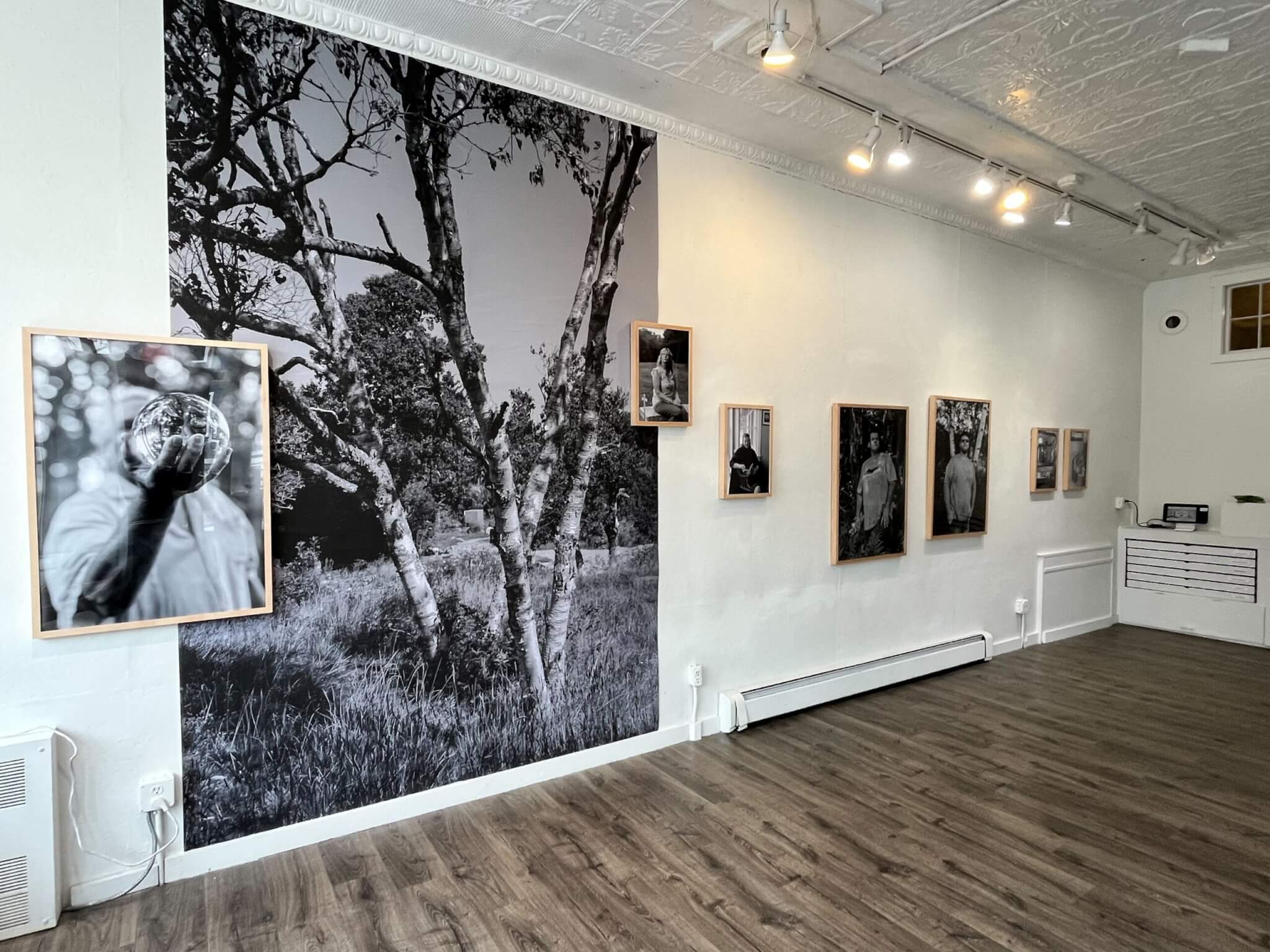
Hannah Latham’s solo show at Gallery 263 starts off with an air of mystery. Black-and-white photos of varying sizes are scattered across the stark white walls of the gallery. No text accompanies the images save for the title of the show, “Ripples in Still Water,” which is printed across the back wall.
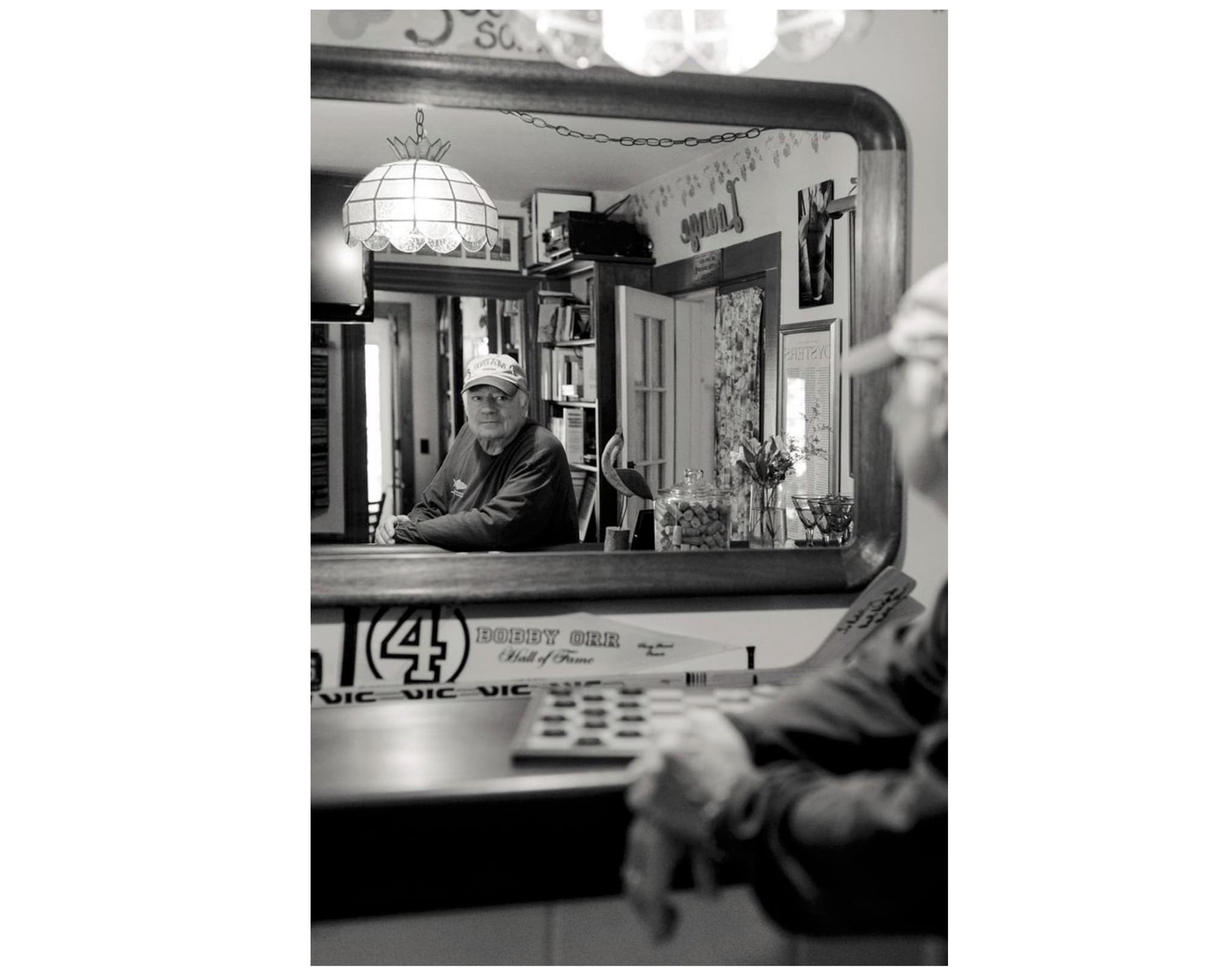
Most of the photos are portraits of people from Lincoln, Maine, and are supplemented by environmental snapshots of the rural town. But who are these people? And why do they matter? The figures themselves do not offer answers. Although it is not obvious from the photos alone, Latham’s subjects have all been affected by abuse, substance addiction, or trauma.
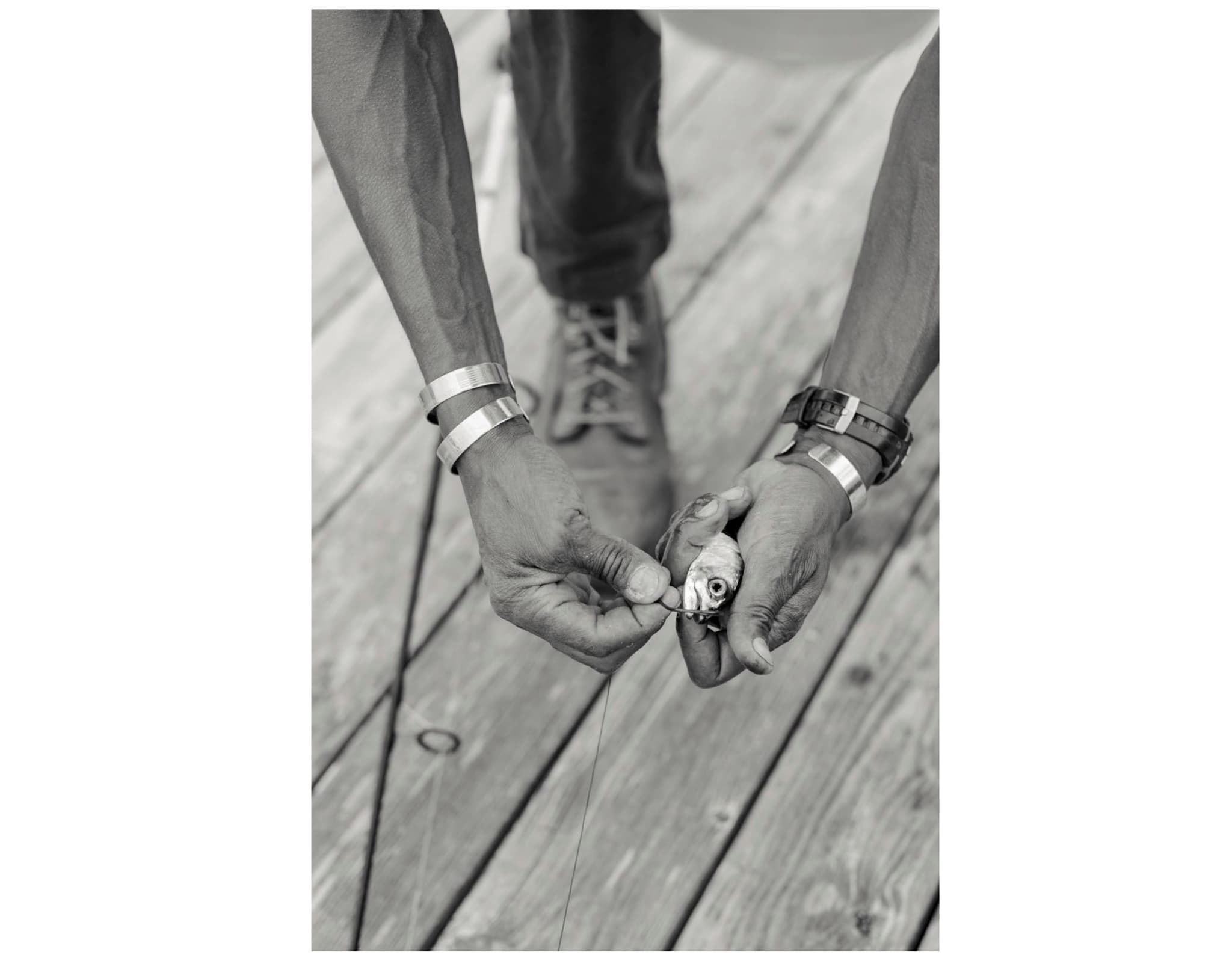
A shelf at the back of the gallery gives viewers the crucial information. Here, I picked up an amethyst worry stone. A small sign informed me that the stone symbolizes sobriety and encouraged me to rub it with my thumb as a grounding exercise. Accompanying the worry stone was a booklet introducing each subject along with a few extra photos that didn’t make it onto the walls. I found myself flipping through the booklet as I walked, matching faces on paper to the ones framed behind glass. The stories of these people—a grieving artist, a war veteran, a recovering alcoholic—materialized through this process of careful engagement.
Despite having spent summers in Maine as a child, Latham is not a Lincoln native. One might see her as a sort of ethnographer, an outsider documenting the lives of strangers. But the gradual uncovering of intimate details in the booklet is reflective of Latham’s own relationship with the subjects. Although they started out as strangers, they became closer over the course of photographing. Latham takes care not to leave the viewer out of this vulnerability. She closes the distance between visitor and portrait subject through the arrangement of her show. One wall boasts a large print of a lake with framed portraits overlapping and encircling its perimeter. Here, the figures—which are isolated in their frames—come together, integrated in a unified ecosystem of Latham’s design. Similarly, with portraits positioned on every available wall, the viewer is surrounded by Lincoln residents. Thus, the visitor’s developing relationship with the exhibition mirrors the photographer’s own making process.
This is the most recent show in Gallery 263’s Exhibition Proposal Series, in which artists propose and self-curate their own shows in collaboration with gallery staff. The series offers artists a chance to showcase their pieces through a narrative framework of their choosing. Latham takes full advantage of this, utilizing the small space to explore large themes of grief and hardship.
“Ripples in Still Water” marks an expansion of Latham’s career-long interest in community, memory, and loss. By designing layers of visual and textual information, Latham creates a push and pull of intimacy that introduces viewers to the community with which she has become intertwined. The result is a show that shines through its moments of close looking, quietude, and contemplation.
“Ripples in Still Water” is on view through May 10 at Gallery 263, 263 Pearl Street, Cambridge, MA.
This review was written by a fellow of the 2026 Boston Art Writing Fellowship, a partnership between Praise Shadows Art Gallery and Boston Art Review designed to offer an introduction to curatorial work and sharpen the critical skills of writing, editing, and storytelling in the contemporary art landscape.