Last Saturday, when the smoke cleared from the extravagant rockets’ red glare, marking the 250th anniversary of the signing of the Declaration of Independence, news broke of a policy firecracker lobbed at a familiar target: the Smithsonian.
If “The medium is the message,” then the July 4 release of the White House Domestic Policy Council’s 160-page report accusing the Smithsonian of “extreme political activism” and “anti-white activism” left little room for subtlety. Titled “Saving America’s Story: How Ideological Capture at the Smithsonian Institution’s National Museum of American History Erases Our Heritage,” the report criticizes the broader Smithsonian Institution, which oversees twenty-one museums, twenty-one libraries, multiple research institutions, and the National Zoo. But it took particular aim at the National Museum of American History. In response, Secretary Lonnie G. Bunch III sent an email to Smithsonian staff countering the report’s findings, writing that it is “not a fair characterization of the work and totality of the National Museum of American History.”
The report is just the latest chapter in a series of policy attacks by the Trump administration on the systems that support cultural production in the United States. Along with an article about the July 4 report, The New York Times published a remarkable behind-the-scenes account of the Trump administration’s targeting of the Smithsonian’s leadership over the last year. The feature details the ongoing pressure campaign against Secretary Bunch, the Smithsonian’s first black secretary, and Kim Sajet, the former director of the National Portrait Gallery, who resigned after pressure from President Trump.
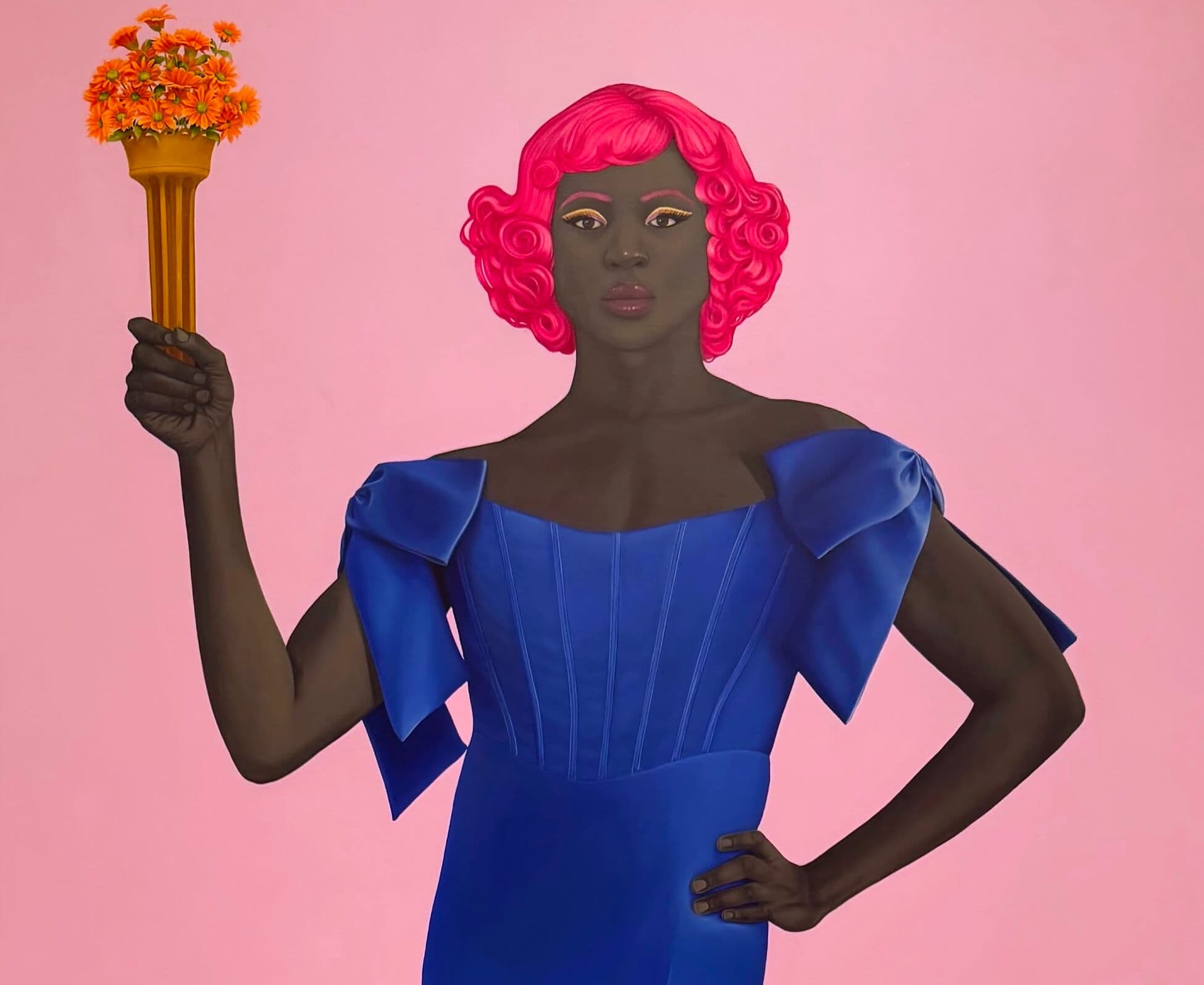
The account of how these attacks unfolded illustrates the Trump administration’s cultural policy playbook. It shows how Trump deputies, such as Vince Haley, the director of the White House’s domestic policy council, have been adept at identifying and exploiting gaps in institutional systems to exert control over government-operated cultural institutions. According to the piece, the administration was assisted in implementing this work by Vice President JD Vance (the vice president and chief justice of the Supreme Court always sit on the seventeen-member Smithsonian Board of Regents) and Representative Carlos Giménez, the Trump-appointed regent. Giménez, the piece alleges, led the weaponization of the Smithsonian’s lack of established processes for reviewing and approving museum exhibitions. Among the high-profile exhibitions flagged for rebuke in the process: “Amy Sherald: American Sublime”—which the artist ultimately withdrew in protest—and an exhibition that included a photograph of President Trump with accompanying wall text mentioning his two impeachments.
The Smithsonian Institution and the Kennedy Center are operated as public-private partnerships, and the federal government heavily shapes their operations and funding. This makes them the most overt places where we can see the Trump administration’s cultural policy agenda and how it is being rolled out. But cultural policy reform and the Trump administration aren’t limited to the Smithsonian Institution and Kennedy Center.
Trump’s recent phone call to FIFA President Gianni Infantino—in which he asked FIFA to review US soccer star Folarin Balogun’s suspension—has me thinking about the imbroglio involving the US Pavilion at the Venice Biennale.
This year, rather than go through a peer-reviewed open-call selection process overseen by the National Endowment for the Arts, the selection of the artist to represent the US was an inside job led by Erin Elmore, the director of the State Department’s Art in Embassies program. Puck has described her role as “running the international arm of Trump’s literal culture war.” According to a January article, Elmore led the back-channel awarding of the US Pavilion commission to friend and Florida socialite Jenni Parido, the director of the newly created nonprofit American Arts Conservancy.
Though the rules of contemporary art are considerably more opaque and nuanced than those of soccer, both have guardrails and systems for establishing expertise, authority, and value. These systems are meant to at least maintain the illusion that art, like soccer, is in the realm of human ingenuity and therefore can or should operate outside the purview of politics. Whether or not it’s possible for art (or sport) to ever be truly emancipated from politics is a separate debate, but it’s the very illusion that they can be pure of politics that makes them so useful to politics.
The social parallels between culture and sport make them natural policy bedfellows. Many countries with national agencies that oversee cultural policy include art and sport in the same portfolio. Examples include the UK, Vietnam, Qatar, Kazakhstan, and South Korea, to name a few. For better or worse, art, like soccer, is a source of power because it’s a source of legitimacy—and a form of consent to be governed through public sentiment. More abstract than hard power, art’s—and soccer’s—appeal to hearts and minds is useful to states because it offers a valence of attraction and persuasion rather than coercion.
By bending, if not rules, then norms and standards, to their breaking point, the Venice and FIFA cases show that the Trump administration recognizes the power of culture—both art and sport—and is willing to implement policy to mold it to its vision.
Anna Kornbluh, author of Immediacy: Or, The Style of Too Late Capitalism, argues that US policy lacks recognition of the right to culture as a human right. The right to culture is outlined in Article 27 of the Universal Declaration of Human Rights. But, Kornbluh notes, the US is the only signatory that “didn’t actually fund or implement the right to culture.”
This question of how the US funds who gets to participate in culture is why a June article published in Inside Philanthropy is so interesting. Since the US government funds so little of our cultural sector, the sector has grown to rely on philanthropic giving. The article sounds the alarm about the state of the arts in the US for an invisible but critical sliver of the country’s arts ecosystem: philanthropists and grantmakers. The piece details how federal cuts to the arts, combined with pressure campaigns by the administration targeting artists and nonprofit arts organizations, and shifts in corporate giving, are creating a crisis that is nothing short of existential. As the arts are cut from philanthropy grantmaking portfolios to redirect funds to other programs also affected by federal cuts (e.g., DEI, immigration, healthcare, and housing), the redirected funding flow places arts organizations in a bind. They have to both find ways to ensure their sustainability and be seen as a “safe bet” for grantmakers to invest in, even as those very grantmakers pull back.
Trump’s FIFA phone call and the targeting of the Smithsonian for being “anti-white” occurred around the same time that masked members of the neo-fascist, white supremacist group Patriot Front marched toward Capitol Hill bearing Confederate flags. They are part of the same project of isolation and division. As the cost of participating in daily life—going to a museum, playing youth sports, being a sports fan, or even dining at restaurants—skyrockets, the Trump administration’s policy agenda isn’t just targeting government-run cultural institutions; it’s a holistic strategy that closes off avenues for people to participate in civic life, whether funded by government, philanthropy, or the private sector.